


Fernand Braudel Center for the Study of Economies, Historical Systems, and Civilizations (2020)
From its founding in 1976 by Immanuel Wallerstein, the Fernand Braudel Center has built an enviable, world-wide reputation for innovation and excellence in social science. The activities of the Center fall loosely into four categories: hosting international scholars, sponsoring major conferences and scholarly meetings, initiating and supporting Research Working Groups, carrying on an active publication program. We operate on two assumptions. One is that there is no structure that is not historical. In order to understand a structure one must not only know its genesis and its context; one must also assume that its form and its substance are constantly evolving. The second assumption is that no sequence of events in time is structureless, that is, fortuitous. Every event occurs within existing structures, and is affected by its constraints. Every event creates part of the context of future events. Of course, there are ruptures in structures which represent fundamental change. But such ruptures too are explicable in terms of the state of the structures. We therefore do not separate the study of historical sequence and the study of structural relationships. We believe that the problem is not to find an interdisciplinary meeting ground of the study of historical sequence (history) and the study of structures (anthropology, sociology, and other social sciences). It is rather to perceive our study as an imbricated whole within which different scholars will of course emphasize different immediate concerns and therefore frequently use different approaches, emphases, methodologies. We are further uncomfortable with the traditional divide of the humanities versus the (social) sciences. At least at the level of explaining large-scale social change over time, we find that it is not very meaningful to distinguish between a humanistic and a scientific approach. We wish primarily to explain systematically and coherently what is fundamentally a single occurrence, the development of the modern world-system.
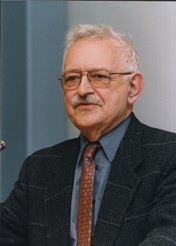
IMMANUEL WALLERSTEIN,
Founding Director
(1976-2005)
It is with profound sorrow that we join the family, friends and colleagues of Immanuel Wallerstein, Founding Director of the Center, in mourning his passing. Immanuel changed the way we see the world; indeed, he changed the world that we see. He changed the way we understand what we experience and the forms of meaningful action we can take to transform our world into a more egalitarian and substantively rational one. But we shall miss more than his intellectual leadership and scholarly example; we shall miss the man—his consideration, humor, and generosity. He practiced his own dictum: “It is encouraged to encourage.” For all who knew him, it was a supreme privilege.
Richard E. Lee
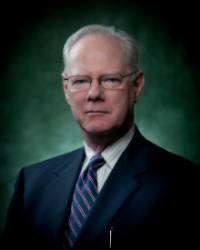
Richard E. Lee,
Director
(2006-2020)
Richard E. Lee has been affiliated with the Fernand Braudel Center in various capacities since 1987. He is best known for elaborating the structures of knowledge approach within world-systems analysis in writings that explore new approaches in the humanities (cultural studies), in the social sciences (science studies) and in the sciences (complexity studies)—and the implications of these developments for methods in social research.

Dale Tomich,
Deputy Director
(2006-2020)
Dale Tomich is concerned with slavery, compulsory labor and the formation of the Atlantic as a historical region of the capitalist world-economy. His long-term research conducted through the Second Slavery network, most recently based at the Fernand Braudel Center, examines slavery in Brazil, Cuba, and the United States during the nineteenth century with the aim of understanding the ways that systems of slavery and forced labor expanded and were transformed in response to the industrialization of the world-economy.
Images Enrich Knowledge of Slavery
Film by Dale Tomich:
"Caribbean Journey: Conversations with Sidney Mintz"